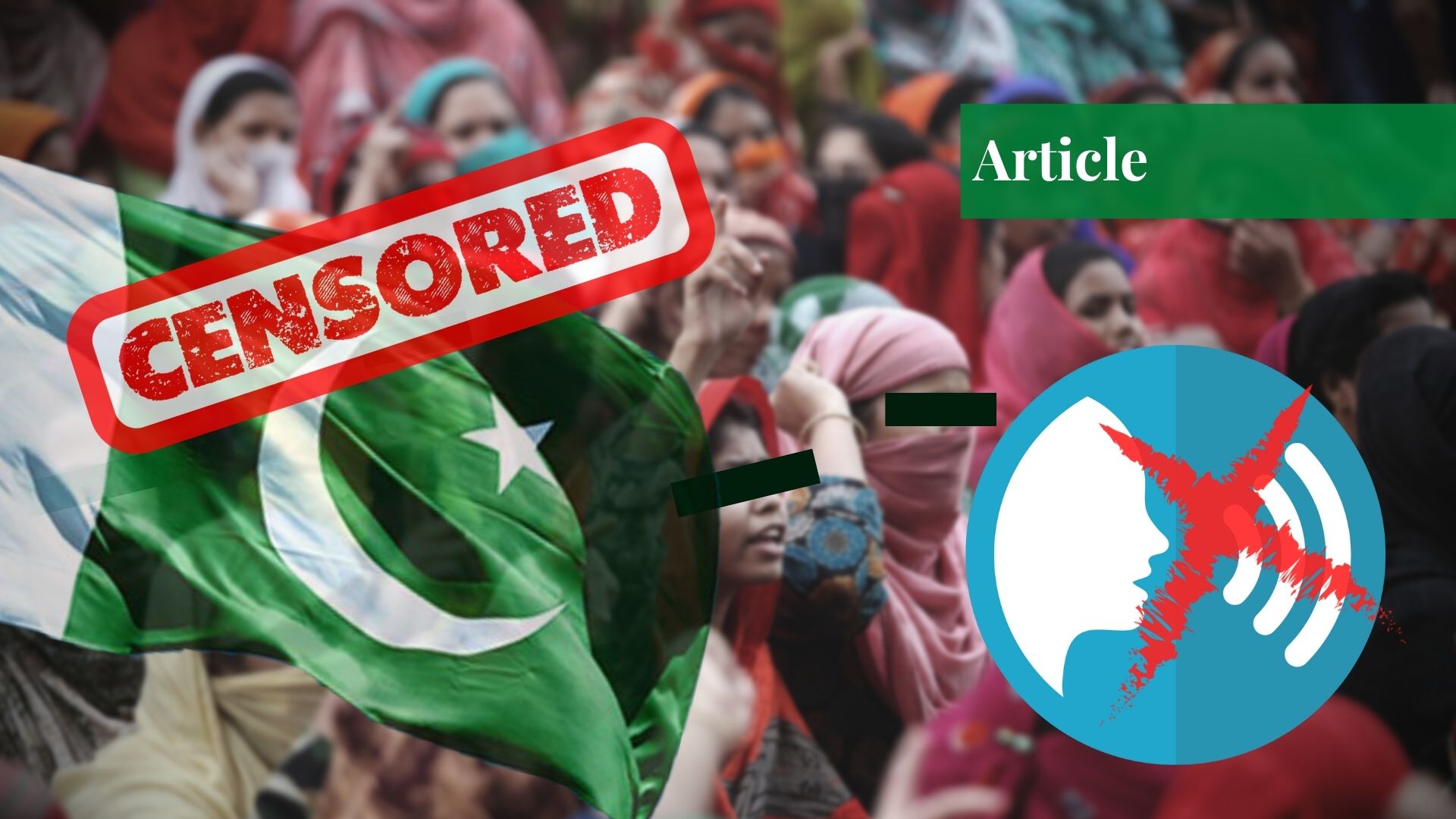
The air in Islamabad feels thick these days, weighted by the shadow of censorship. The Pakistani government has doubled down on its efforts to silence dissent, choking free expression at every turn. What was once a vibrant landscape of ideas is now being suffocated under the weight of red tape and fear.
In recent months, Pakistan has seen a surge in censorship cases that defy logic and justice. Journalists, activists, and even artists are being targeted with increasing frequency. The excuse, as always, is national security—a phrase that has become a rallying cry for authoritarian regimes around the world. But in Pakistan, this mantra rings especially hollow.
The latest round of crackdowns began with the implementation of new digital regulations, ostensibly designed to combat terrorism. In reality, these rules have given the government carte blanche to censor content it deems “objectionable.” Social media platforms are being scrubbed of critical voices, and journalists are forced to walk a tightrope of self-censorship to avoid imprisonment or worse.
But this isn’t just about politics. It’s about power. The Pakistani elite have always been uneasy with scrutiny, and in recent years, they’ve doubled down on their efforts to control the narrative. The government has taken aim at everything from investigative reporting to satirical content, leaving many wondering where the line is drawn.
One of the most egregious cases involves the plight of Pakistan’s marginalized communities. Activists advocating for LGBTQ+ rights, religious minorities, and laborers have faced increasing harassment. Their voices are being silenced not just by the state but by society at large. The intersection of censorship and cultural suppression is a dangerous game, one that erodes the very fabric of democracy.
And then there’s the economic angle. Pakistan’s economy is teetering on the brink of collapse, with inequality reaching staggering levels. Yet, discussions about economic justice are being stifled, leaving the public in the dark about the true state of affairs. When free expression is under siege, it’s not just ideas that suffer—it’s democracy itself.
Still, there’s hope. Grassroots movements and digital activism are flourishing, even as the government tightens its grip. Ordinary Pakistanis are finding creative ways to circumvent censorship, using encrypted platforms and coded language to share their stories. The fight for truth is far from over.
For now, the struggle continues in Islamabad, where the stakes couldn’t be higher. The question remains: will Pakistan’s people find a way to reclaim their right to speak freely, or will the forces of repression prevail? The answer may well determine the future of democracy itself.
About the Author:
Tom O’Connor is Economy Editor at our publication. Economist turned journalist, Tom specializes in global economic inequality and its impact on social structures. His work is both analytical and deeply human.
 Bilingual journalist covering Middle Eastern politics and culture. Her reporting bridges the gap between local traditions and global trends, offering unique insights.
 Award-winning reporter specializing in climate change and environmental policy. His work has taken him from the Amazon rainforest to polar regions, documenting the human impact of global warming.
 Veteran journalist with over 15 years of experience leading international news operations. Known for her visionary approach to storytelling and editorial strategy, Jane has guided award-winning investigations across continents.
 Tech and innovation reporter with a focus on the intersection of technology and society. Her work explores how advancements impact global communities and economies.
 Urban affairs correspondent focusing on the challenges and opportunities of rapid urbanization. His work examines how cities shape and are shaped by global trends.