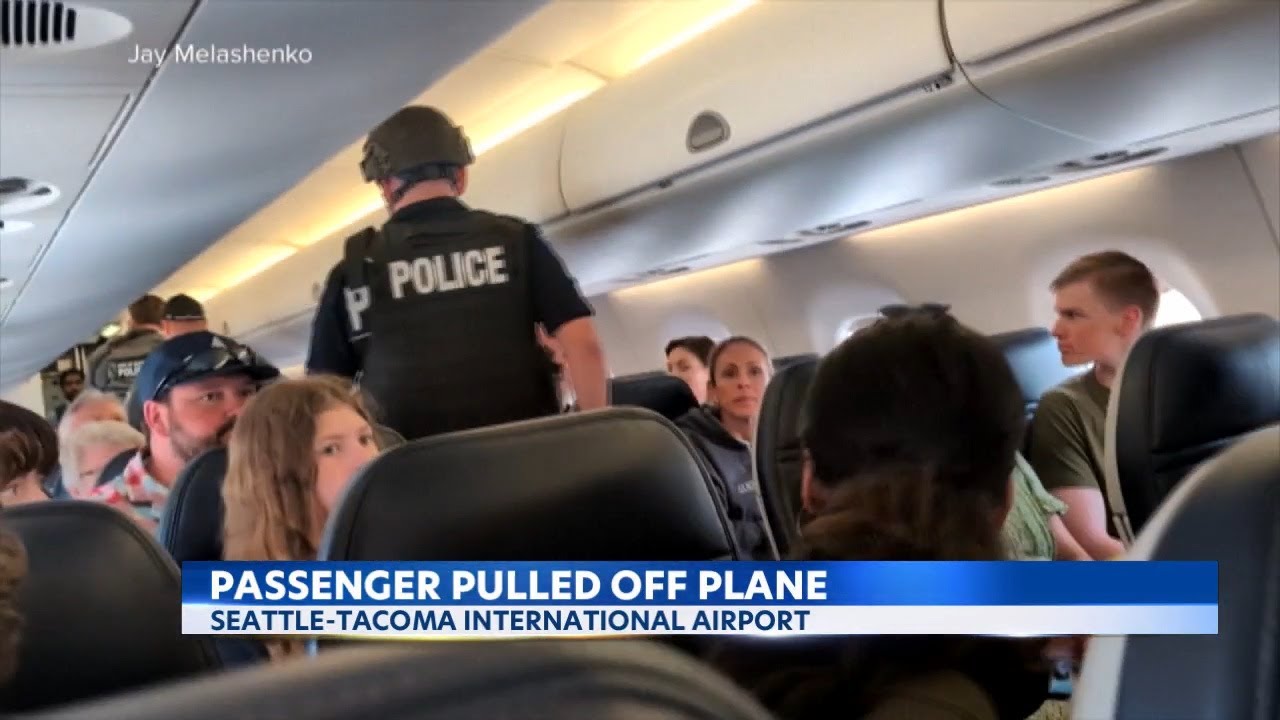
Passenger Disobedience Halts Plane for Public Safety
In the quiet hum of the aircraft cabin, a routine journey took an unexpected turn when a passenger’s actions forced the plane to ground. The incident, which unfolded mid-flight, raised questions about the fine balance between individual behavior and public safety—a tension that has become increasingly prominent in an age of globalization and rising inequalities.
The flight, bound for a major European city, was carrying 130 passengers and five crew members when a male passenger refused to comply with basic safety protocols. According to eyewitness accounts, the man ignored repeated instructions from cabin staff to fasten his seatbelt during takeoff and landing. His defiance escalated further when he insisted on wandering the aisle despite explicit requests to remain seated.
What followed was a moment of collective tension: the pilot announced an emergency descent, diverting the plane to the nearest airport. Passengers, many of whom were traveling for work or leisure, found themselves caught in a bureaucratic limbo. The man was eventually escorted off the aircraft by security personnel, and the flight was delayed by several hours.
This incident, while seemingly isolated, reflects broader societal trends that intersect with issues of inequality and social justice. It raises questions about the responsibilities we owe to one another in shared spaces—a principle that is particularly relevant in an era where air travel has become a democratic mode of transportation for people from all walks of life.
But it also highlights the challenges faced by airlines and crew members, who are tasked with maintaining safety while navigating the complexities of human behavior. As one flight attendant later remarked, “We’re not just serving passengers; we’re managing a microcosm of society every time we take off.”
Experts suggest that such incidents may be linked to growing frustration over economic disparities and the erosion of trust in institutions. In Europe, where this particular flight originated, concerns about inequality have fueled debates over everything from labor rights to public safety. South Asia, too, has seen similar patterns emerge, as rapid urbanization and global integration bring new pressures to bear on traditional norms and behaviors.
The incident also underscores the importance of empathy in addressing such situations. Rather than viewing the passenger’s actions through a punitive lens, it is worth considering the underlying factors that might have contributed to his behavior—whether they stem from mental health challenges, a sense of disconnection, or something else entirely.
As we reflect on this moment, it serves as a reminder that public safety is not just about rules and regulations. It’s about fostering environments where individuals feel heard, respected, and supported. In an increasingly interconnected world, such values are not merely progressive ideals—they are essential to ensuring the well-being of us all.
About the Author:
Tom O’Connor is Economy Editor at our publication. Economist turned journalist, Tom specializes in global economic inequality and its impact on social structures. His work is both analytical and deeply human.
 Bilingual journalist covering Middle Eastern politics and culture. Her reporting bridges the gap between local traditions and global trends, offering unique insights.
 Award-winning reporter specializing in climate change and environmental policy. His work has taken him from the Amazon rainforest to polar regions, documenting the human impact of global warming.
 Veteran journalist with over 15 years of experience leading international news operations. Known for her visionary approach to storytelling and editorial strategy, Jane has guided award-winning investigations across continents.
 Tech and innovation reporter with a focus on the intersection of technology and society. Her work explores how advancements impact global communities and economies.
 Urban affairs correspondent focusing on the challenges and opportunities of rapid urbanization. His work examines how cities shape and are shaped by global trends.