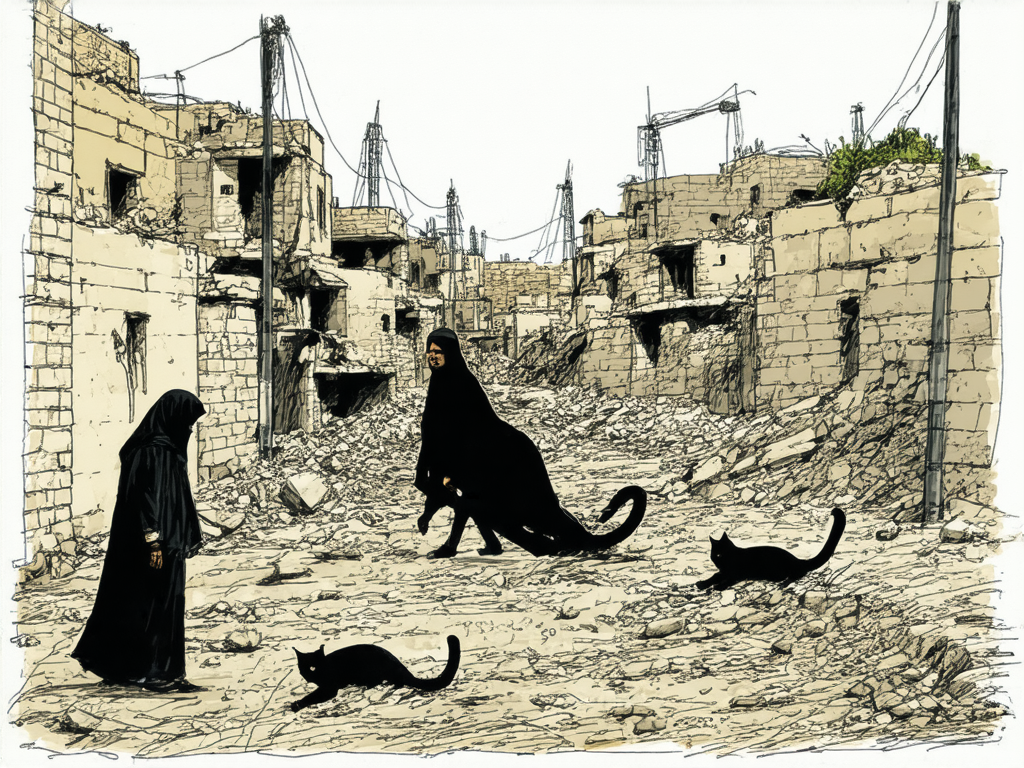
Jenin’s Occupied Streets: A Tale of Nine Lives Lost
In the heart of the West Bank lies Jenin, a town steeped in history and resilience. Known for its bustling markets and vibrant culture, Jenin’s streets are a tapestry of life—until they aren’t. Recently, these same streets became witnesses to a tragic loss: nine lives cut short in an escalation of violence that has left the community reeling.
Jenin, home to several refugee camps, is a microcosm of the challenges faced by urban areas in occupied territories. The town’s unplanned growth and lack of adequate infrastructure have long been issues exacerbated by political tensions. Here, the interplay between urban development and conflict becomes starkly apparent.
The day started like any other for the residents of Jenin. Market stalls overflowed with produce, children played in the streets, and families prepared meals in their modest homes. Yet, beneath this veneer of normalcy lay a tense undercurrent. The occupying forces’ presence was ever-present, their surveillance shaping the town’s layout and restricting movement.
As tensions escalated, the streets that once buzzed with life transformed into battlegrounds. Nine lives were lost—each a story, each a family left shattered. The names and faces of those who perished are etched in the collective memory of Jenin, a poignant reminder of the human cost of occupation.
Local leaders speak of the need for justice and change. “Our streets should be places of life, not death,” said Ahmed*, a community activist. “Urban planning must prioritize people, not conflict.”
The role of technology in this narrative is dual-edged. While it offers tools for resistance—like global advocacy campaigns—it also aids those who perpetuate the status quo, with surveillance and military tactics tightening control over Jenin’s spaces.
Looking ahead, Jenin’s future hangs in the balance. Possibilities for change are met with both hope and skepticism. Grassroots movements advocating for justice and sustainable urban development are gaining momentum, offering a glimmer of progress despite the odds.
In Jenin’s occupied streets, the struggle continues—a testament to the resilience of its people and a call for a future where cities are built on equity, not occupation.
About the Author:
Ravi Patel is Urban Affairs Editor at our publication. Urban affairs correspondent focusing on the challenges and opportunities of rapid urbanization. His work examines how cities shape and are shaped by global trends.
 Bilingual journalist covering Middle Eastern politics and culture. Her reporting bridges the gap between local traditions and global trends, offering unique insights.
 Award-winning reporter specializing in climate change and environmental policy. His work has taken him from the Amazon rainforest to polar regions, documenting the human impact of global warming.
 Veteran journalist with over 15 years of experience leading international news operations. Known for her visionary approach to storytelling and editorial strategy, Jane has guided award-winning investigations across continents.
 Tech and innovation reporter with a focus on the intersection of technology and society. Her work explores how advancements impact global communities and economies.
 Urban affairs correspondent focusing on the challenges and opportunities of rapid urbanization. His work examines how cities shape and are shaped by global trends.