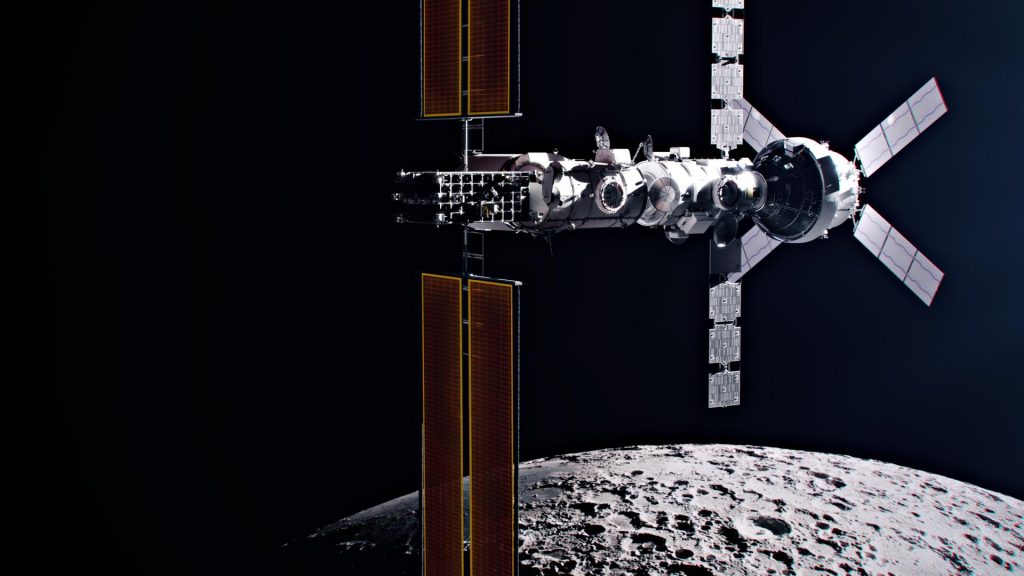
In the silent expanse of space, where nations have long sought to plant their flags and inscribe their names among the stars, Russia is once again breaking barriers. This time, it’s not just about reaching the Moon—it’s about redefining what it means to explore it.
The Russian Federal Space Agency, Roscosmos, has unveiled a series of groundbreaking initiatives that promise to revolutionize lunar exploration. From advanced robotic rovers capable of traversing treacherous terrain to habitats designed for long-term human habitation, Russia is betting big on the next chapter of humanity’s journey beyond Earth. These developments are not just about technological prowess; they’re about reimagining what progress looks like in an increasingly interconnected world.
One of the most notable projects is the development of a modular lunar base, a concept that shifts the paradigm from single-use missions to sustainable, reusable infrastructure. This approach isn’t just cheaper—it’s smarter. By designing systems that can adapt and evolve over time, Russia is setting a new standard for efficiency and innovation in space exploration.
But the implications extend far beyond the Moon. The technologies being developed—autonomous navigation systems, 3D printing of habitats using lunar regolith, and advanced life support systems—are not just about surviving on the lunar surface; they’re about reshaping how we approach challenges here on Earth. Imagine a world where the same innovations that keep astronauts alive in one of the harshest environments known to humanity can be adapted to address housing shortages, energy crises, or climate change.
And then there’s the question of equity. Space exploration has long been the domain of a few wealthy nations and corporations, but Russia’s focus on collaboration and open-source innovation is democratizing access. By sharing knowledge and expertise with developing countries, Roscosmos is helping to bridge the gap between global haves and have-nots. This isn’t just about space—it’s about redefining what it means to be part of a global community.
The human element can’t be overlooked. Behind every algorithm and every piece of hardware are the stories of the men and women who make it all possible. From engineers working tirelessly in Moscow’s research labs to the cosmonauts willing to risk their lives for the sake of discovery, these individuals embody the spirit of progress. Their work isn’t just about science—it’s about hope.
As we look to the future, the lessons from Russia’s lunar leap are clear: true progress is about more than just reaching new frontiers. It’s about how we get there—and who gets to come along. The next chapter in humanity’s story is being written not just on the Moon, but here on Earth, where every step forward is a step toward a fairer, more equitable world.
About the Author:
Tom O’Connor is Economy Editor at our publication. Economist turned journalist, Tom specializes in global economic inequality and its impact on social structures. His work is both analytical and deeply human.
 Bilingual journalist covering Middle Eastern politics and culture. Her reporting bridges the gap between local traditions and global trends, offering unique insights.
 Award-winning reporter specializing in climate change and environmental policy. His work has taken him from the Amazon rainforest to polar regions, documenting the human impact of global warming.
 Veteran journalist with over 15 years of experience leading international news operations. Known for her visionary approach to storytelling and editorial strategy, Jane has guided award-winning investigations across continents.
 Tech and innovation reporter with a focus on the intersection of technology and society. Her work explores how advancements impact global communities and economies.
 Urban affairs correspondent focusing on the challenges and opportunities of rapid urbanization. His work examines how cities shape and are shaped by global trends.