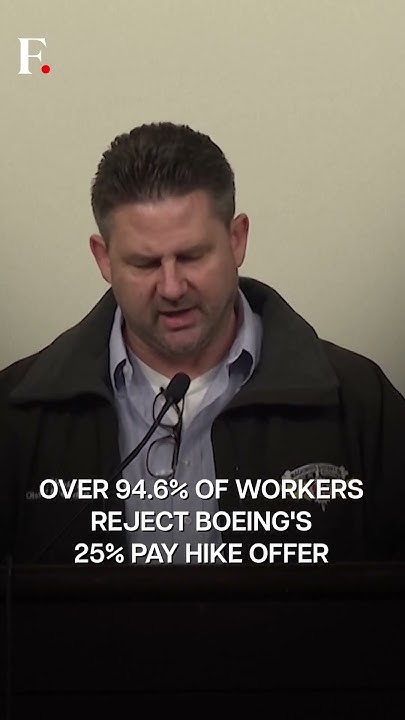
After a Fight, Boeing Gives Workers a 25% Pay Hike
In the shadow of Seattle’s skyline, where towering cranes loom over the city’s industrial heart, Boeing workers have long toiled under the hum of assembly lines and the clang of metal. For decades, these men and women have built the planes that carry the dreams of travelers across the globe, yet their own lives often felt tethered by financial constraints. But after months of fierce negotiation and a series of strikes, these workers have won a significant victory: a 25% pay hike.
The fight for fair wages at Boeing is not a new story. It’s a chapter in a longer narrative of labor struggles, where workers have often had to raise their voices—and sometimes shut down production—to demand the dignity they deserve. This time, however, the outcome was different. After a prolonged standoff that tested the resolve of both parties, Boeing agreed to a deal that would give its employees a much-needed boost.
The 25% increase is more than just a number; it’s a testament to the power of collective action. Union representatives from the International Association of Machinists and Aerospace Workers (IAM) had pushed for this win, knowing that their members were struggling to make ends meet. Many workers were living paycheck to paycheck, relying on food banks or second jobs to support their families. The negotiations were grueling, with Boeing dug in against any significant wage increases, citing the pressures of global competition and shrinking profit margins.
But the workers held firm. They understood that their struggle was not just about pay—it was about respect, about fairness, and about ensuring that those who built Boeing’s success shared in its rewards. For months, they walked picket lines, risking their jobs and livelihoods to make their voices heard. The company, once a symbol of American ingenuity and progress, had become a battleground over the balance between profit and people.
In the end, the workers’ persistence paid off. The new deal not only increases pay but also strengthens benefits and job security. For many, this means the difference between barely scraping by and being able to breathe a little easier. One worker, a single mother of two, described how the raise would allow her to save for her children’s college funds—a future she had previously dared not imagine.
This victory is a beacon of hope in an era where economic inequality continues to widen. It’s a reminder that when workers unite and fight for their rights, change is possible—even against some of the most powerful corporations in the world. Boeing’s decision sets a precedent, signaling to other industries that neglecting labor comes at a cost.
Yet, as the ink dries on this agreement, questions linger about what comes next. Will other companies follow suit? Will this win embolden workers elsewhere to demand similar concessions? And perhaps most importantly, will Boeing honor its commitments, ensuring that the new pay structure is implemented fairly and without retaliation?
For now, the focus remains on the workers who have earned their hard-fought victory. Their story is one of resilience and solidarity—a testament to the enduring power of labor movements in a world that often feels rigged against ordinary people.
In a time when inequality is stark and progress seems slow, Boeing’s workers have shown that even the toughest battles can be won with courage and determination. Their fight isn’t just about pay; it’s about dignity, fairness, and the belief that no one should work hard only to struggle to survive. As they return to their jobs, they carry not just higher wages but a renewed sense of hope—a hope that justice, when fought for, can prevail.
About the Author:
Tom O’Connor is Economy Editor at our publication. Economist turned journalist, Tom specializes in global economic inequality and its impact on social structures. His work is both analytical and deeply human.
 Bilingual journalist covering Middle Eastern politics and culture. Her reporting bridges the gap between local traditions and global trends, offering unique insights.
 Award-winning reporter specializing in climate change and environmental policy. His work has taken him from the Amazon rainforest to polar regions, documenting the human impact of global warming.
 Veteran journalist with over 15 years of experience leading international news operations. Known for her visionary approach to storytelling and editorial strategy, Jane has guided award-winning investigations across continents.
 Tech and innovation reporter with a focus on the intersection of technology and society. Her work explores how advancements impact global communities and economies.
 Urban affairs correspondent focusing on the challenges and opportunities of rapid urbanization. His work examines how cities shape and are shaped by global trends.