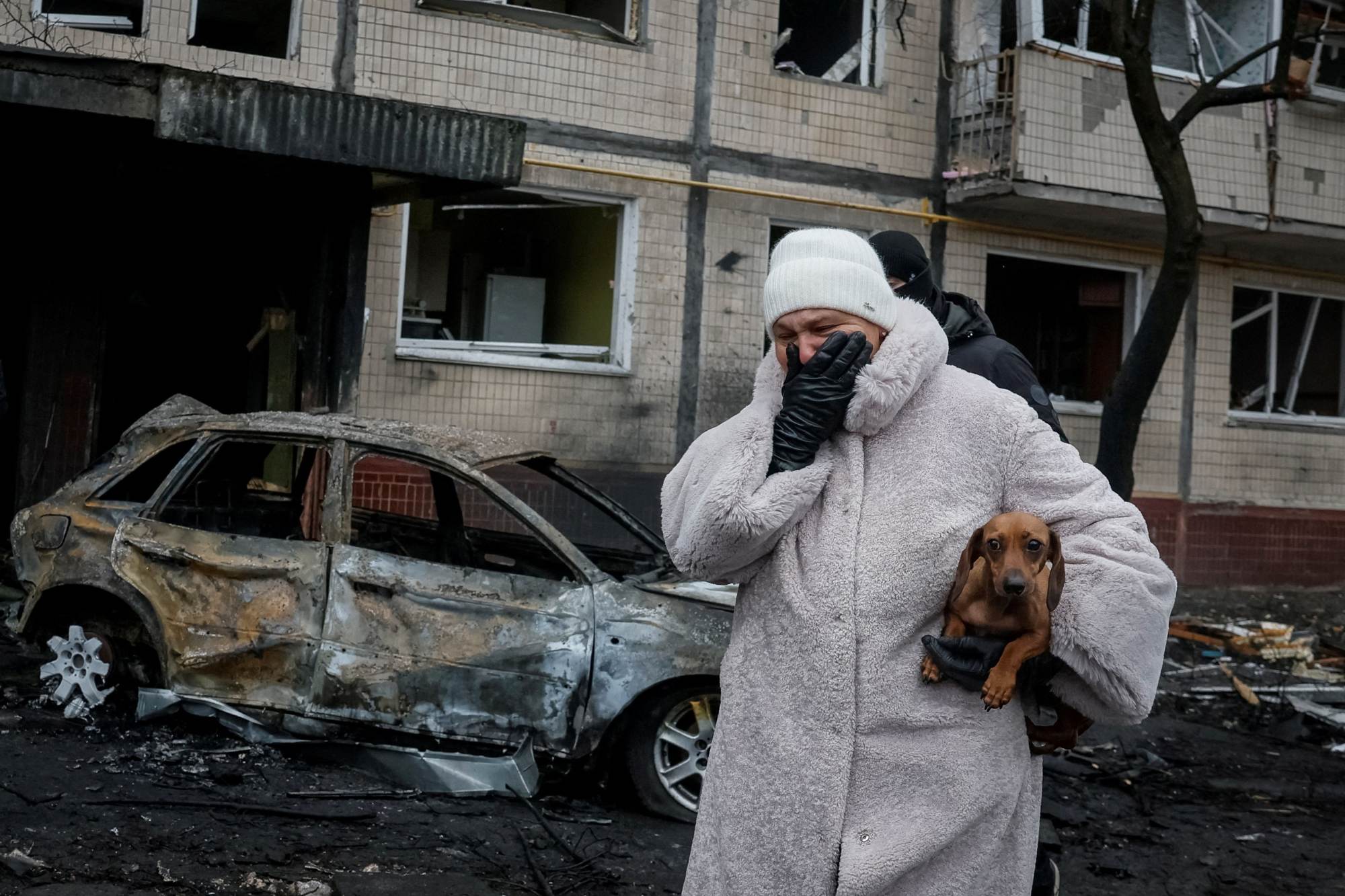
The city of Kyiv, once a bustling hub of culture, commerce, and community, now stands as a symbol of resilience in the face of unprecedented adversity. Since Russia’s invasion of Ukraine began in February 2022, Kyiv has been subjected to relentless bombardment, with Russian forces targeting not just military installations but also the city’s heart—the infrastructure that sustains its people. civilians have endured unimaginable hardships as their lives have been upended by constant airstrikes, destruction of critical services, and the ever-present threat of violence.
A City Under Siege
Kyiv, the capital of Ukraine, is more than just a political center; it is a living organism where streets pulse with life, markets overflow with color and sound, and families build their futures. But since the war began, these familiar sights have been replaced by the eerie silence of empty streets and the constant whir of drones overhead. The targeting of Kyiv’s infrastructure—its power grid, water supply, and transportation networks—has created a humanitarian crisis that shows no signs of abating.
For those who remain in the city, life is a daily battle to survive. Apartment buildings have been reduced to rubble, forcing families to seek shelter in basements and bomb shelters. The once-bustling markets of the city center now lie in ruins, their stalls destroyed and traders displaced. Even access to basic necessities like water and electricity has become a luxury, as Russian strikes have repeatedly knocked out these essential services.
Economic Devastation
The economic toll on Kyiv is staggering. Small businesses, which are the backbone of urban economies, have been hardest hit. Stores, cafes, and workshops that once lined the streets now stand empty, their owners forced to flee or struggling to rebuild. The labor market has been decimated, with workers losing their jobs as factories close and services shut down. Unemployment rates have soared, leaving many families without a livelihood.
The informal economy, which often thrives in cities during times of crisis, is also under severe strain. Street vendors, day laborers, and delivery drivers—many of whom are migrants or marginalized communities—face increased risks as they struggle to earn a living amidst the chaos. The loss of these economic pillars not only exacerbates poverty but also deepens inequality, as those with fewer resources are left without safety nets.
The Human Cost
Beyond the physical destruction lies an intangible loss: the unraveling of community and social fabric. Neighbors who once relied on each other for support now find themselves scattered across the city or even in neighboring countries. The psychological toll of constant fear and uncertainty is profound, with many civilians experiencing trauma that will take generations to heal.
The targeting of civilians and critical infrastructure raises questions about the ethics of modern warfare. International law condemns attacks on non-combatants, yet Russian forces continue to violate these principles. The destruction of hospitals, schools, and cultural institutions not only harms individuals but also erodes the collective memory and identity of the city.
Resilience in the Face of Adversity
Despite the overwhelming challenges, Kyiv’s residents have shown remarkable resilience. Community networks have emerged to provide mutual aid—sharing food, supplies, and shelter—and to organize efforts to repair what has been destroyed. Grassroots initiatives have sprung up to document war crimes, support displaced families, and advocate for peace.
The international community has also stepped in to offer assistance, though the flow of resources remains insufficient to meet the growing needs. Humanitarian organizations have worked tirelessly to deliver aid, but funding gaps persist, leaving many vulnerable individuals without access to basic necessities.
Looking Ahead
As the conflict enters its second year, the future of Kyiv—and Ukraine as a whole—remains uncertain. Rebuilding the city will require not only financial investment but also a commitment to equity and sustainability. Urban planners and policymakers must consider how to reconstruct infrastructure in ways that address long-standing inequalities and build resilience against future shocks.
The lessons from Kyiv’s experience are clear: war does not discriminate, but its impact is felt most acutely by the marginalized and vulnerable. As we look ahead, it is imperative to prioritize investments in urban development that promote social justice, environmental sustainability, and peace. The story of Kyiv is a testament to the strength of its people—and a call to action for the rest of the world.
In times of war, cities are often seen as battlegrounds. But for those who call Kyiv home, the city’s enduring spirit reminds us that it is more than just a location on a map; it is a living, breathing entity shaped by the lives and hopes of its people. As the world watches and waits for peace, Kyiv stands as a powerful symbol of resilience in the face of unimaginable suffering.
About the Author:
Ravi Patel is Urban Affairs Editor at our publication. Urban affairs correspondent focusing on the challenges and opportunities of rapid urbanization. His work examines how cities shape and are shaped by global trends.
 Bilingual journalist covering Middle Eastern politics and culture. Her reporting bridges the gap between local traditions and global trends, offering unique insights.
 Award-winning reporter specializing in climate change and environmental policy. His work has taken him from the Amazon rainforest to polar regions, documenting the human impact of global warming.
 Veteran journalist with over 15 years of experience leading international news operations. Known for her visionary approach to storytelling and editorial strategy, Jane has guided award-winning investigations across continents.
 Tech and innovation reporter with a focus on the intersection of technology and society. Her work explores how advancements impact global communities and economies.
 Urban affairs correspondent focusing on the challenges and opportunities of rapid urbanization. His work examines how cities shape and are shaped by global trends.