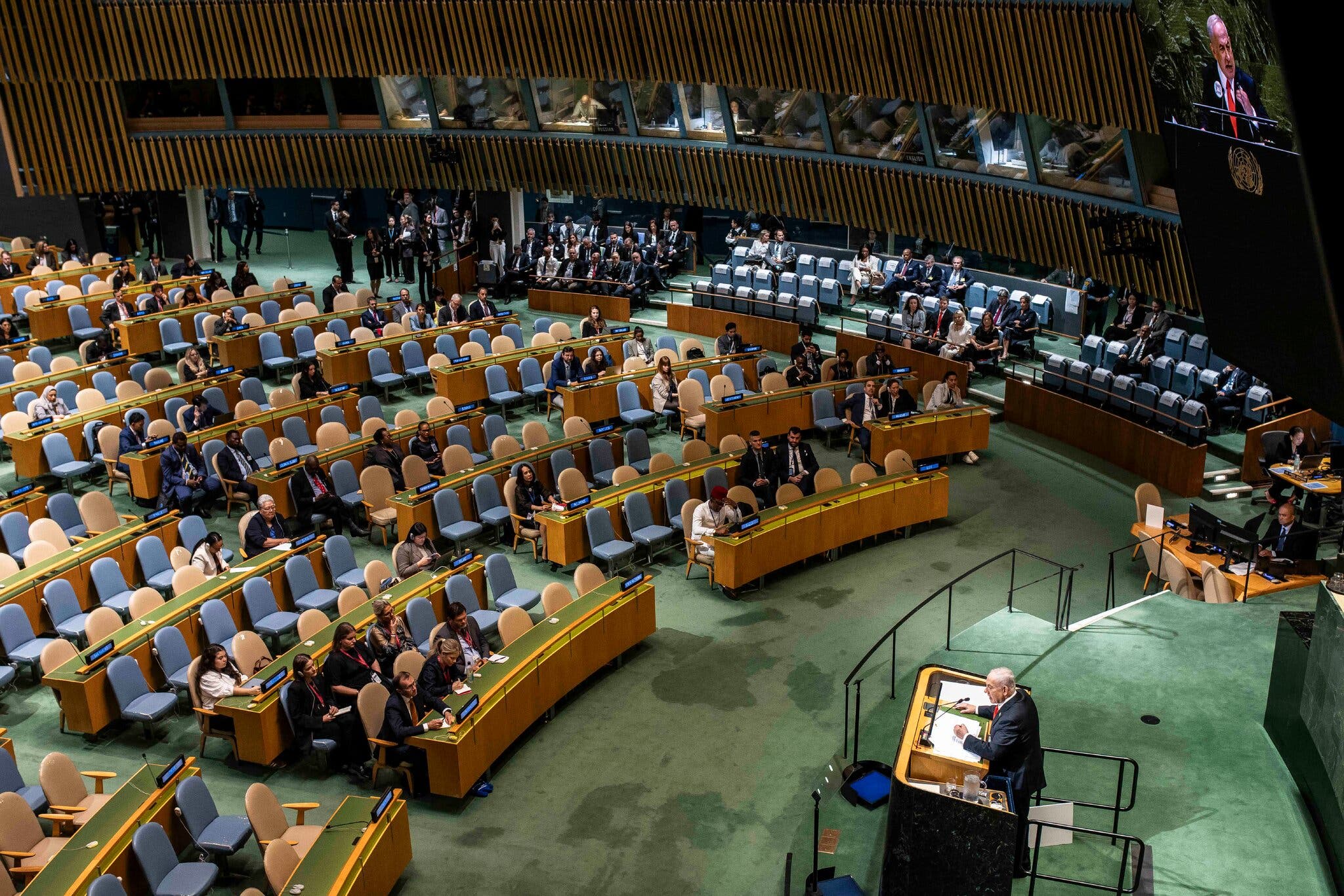
The grand hall stood silent, its marble floors reflecting the emptiness of the room. The chairs, neatly arranged in rows, seemed to echo the absence of the audience Netanyahu had hoped to address. A single projector cast his image onto a screen, his voice playing on a loop—a eerie reminder of a speech delivered to no one. This was not just a moment of political theater; it was a stark symbol of the Palestinian rights ignored by Israel’s leadership.
Netanyahu’s speech, a rehearsed performance filled with platitudes and promises, reverberated through the empty space like an unanswered prayer. His words, carefully crafted to resonate with a global audience, fell flat in the silence. The message was clear: even as he spoke of peace and progress, the Palestinian people remained invisible—erased from the narrative, their suffering left unacknowledged.
The hall’s emptiness was not accidental. It mirrored the growing isolation of Israel’s leadership on the international stage. World leaders had withdrawn in protest, unable to stomach Netanyahu’s continued defiance of international law and human rights principles. The Palestinian people, forced to endure decades of displacement, occupation, and systemic oppression, were left with nothing but the echo of Netanyahu’s hollow words.
But the emptiness was not absolute. Outside the hall, the world was watching. Activists, journalists, and ordinary citizens—across continents and cultures—were documenting the reality that Netanyahu sought to obscure. The images of Palestinian children waving flags in refugee camps, the stories of families displaced by home demolitions, and the courage of activists standing up against injustice were being shared globally. These voices, though silenced by power, could not be ignored.
The Palestinian struggle is not just a battle for land; it is a fight for dignity and self-determination. It is a testament to the resilience of a people who have endured occupation, displacement, and systematic discrimination for decades. The international community must stand in solidarity with them—not through empty words, but through actions that hold Israel accountable for its violations.
The empty hall, a microcosm of Netanyahu’s rhetoric, serves as a stark reminder of what is at stake. As long as Palestinian rights are ignored, the world cannot move forward. The echoes of an empty room must be replaced by the collective voice of justice and equality. It is time to listen—to the Palestinian people, to international law, and to the moral imperative of human rights.
In this moment of silence, let us not lose hope. The struggle for peace and justice continues, even in the emptiest of halls.
About the Author:
Sofia Hassan is Investigative Reporter at our publication. Documentary filmmaker and reporter, Sofia brings a visual storytelling approach to her work on migration and displacement. Her stories have aired on major networks worldwide.
 Bilingual journalist covering Middle Eastern politics and culture. Her reporting bridges the gap between local traditions and global trends, offering unique insights.
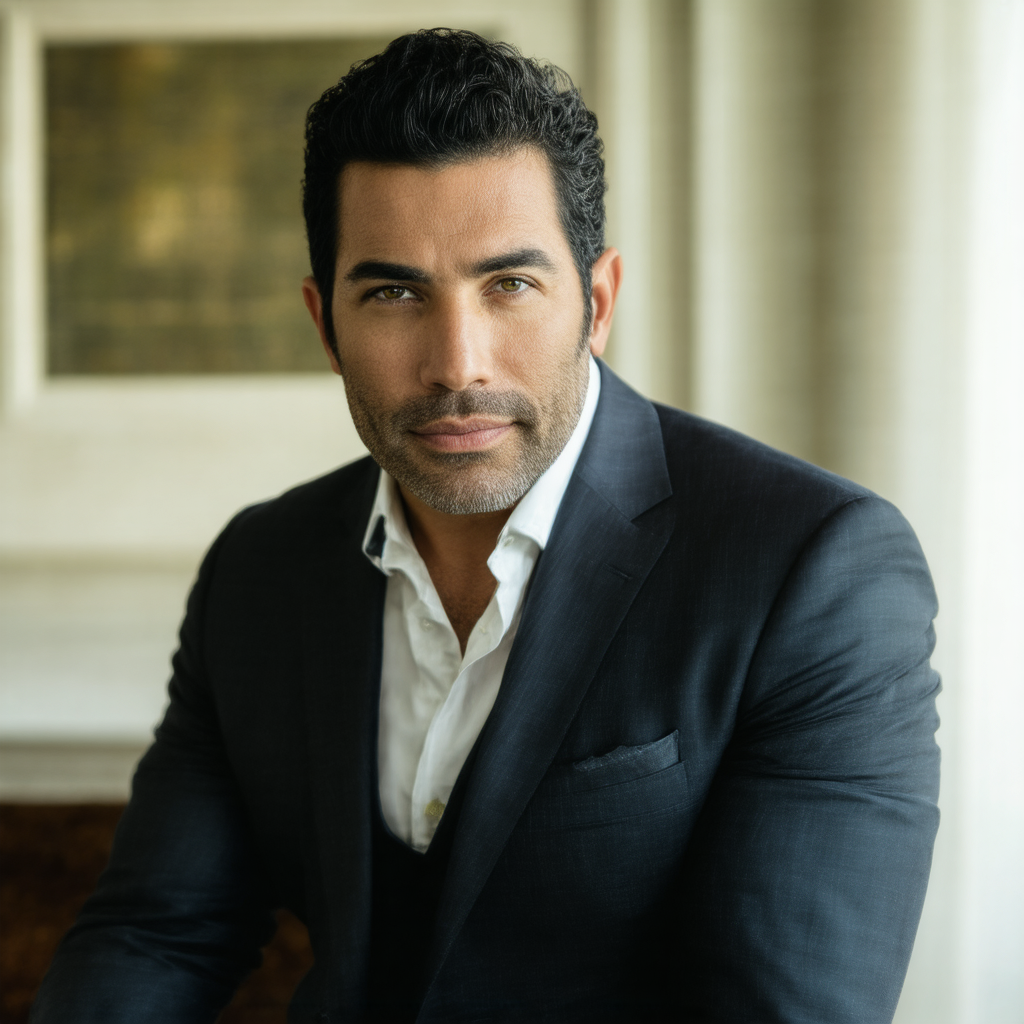 Award-winning reporter specializing in climate change and environmental policy. His work has taken him from the Amazon rainforest to polar regions, documenting the human impact of global warming.
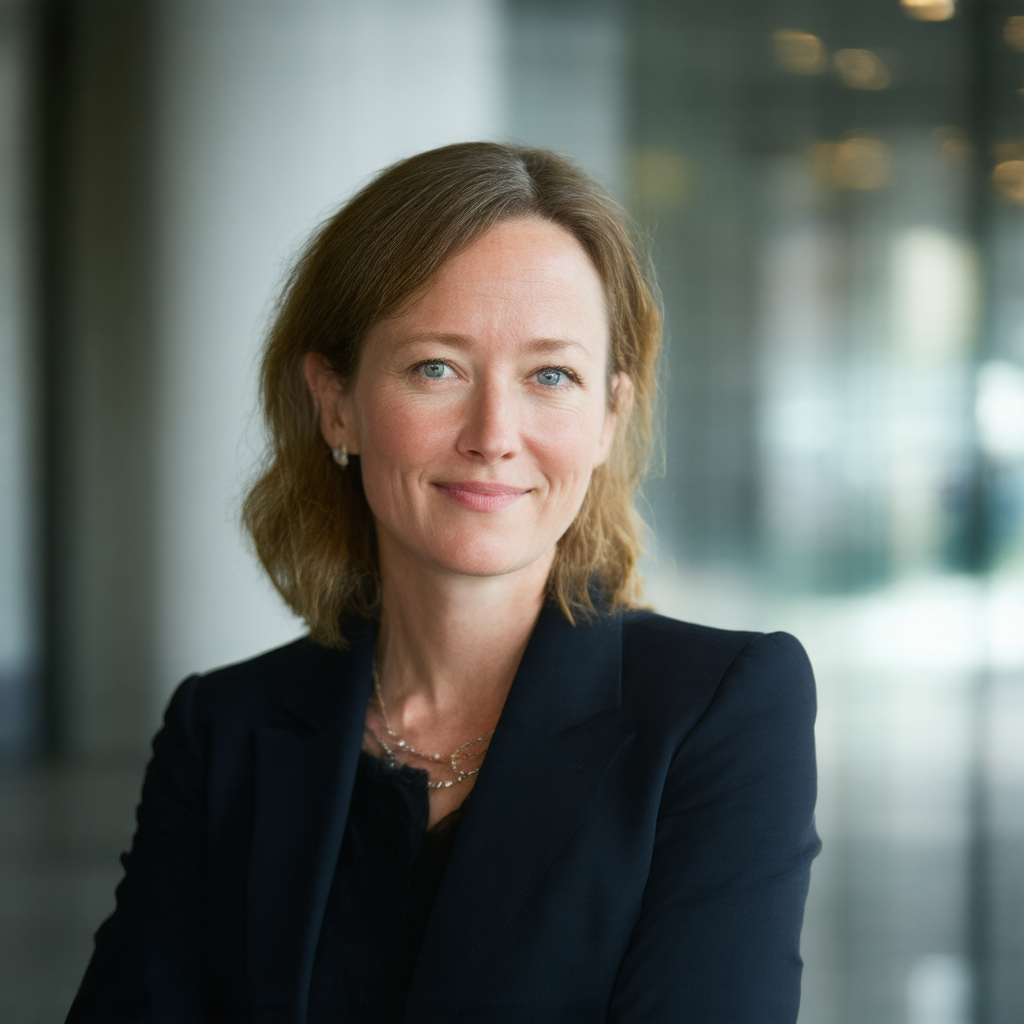 Veteran journalist with over 15 years of experience leading international news operations. Known for her visionary approach to storytelling and editorial strategy, Jane has guided award-winning investigations across continents.
 Tech and innovation reporter with a focus on the intersection of technology and society. Her work explores how advancements impact global communities and economies.
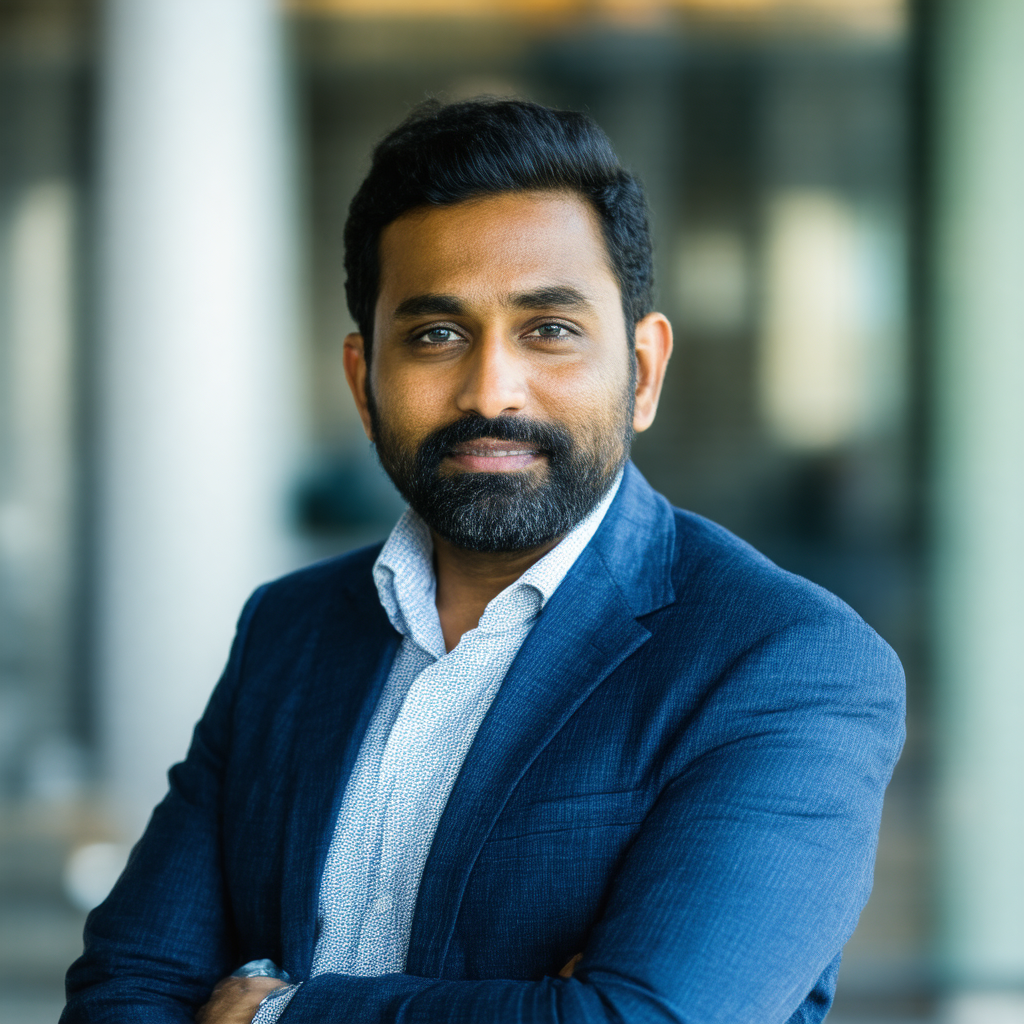 Urban affairs correspondent focusing on the challenges and opportunities of rapid urbanization. His work examines how cities shape and are shaped by global trends.